The first Amazon Kindle was released back in November 2007. It sold out in five and a half hours and was on backorder for several months after that, being the very first ebook reader to offer wireless connectivity.
The Kindle 2 came along in early 2009, and then the Kindle DX shortly after, soon followed by upgraded versions of both models with global 3G wireless. Then the Kindle 3, Kindle Wi-Fi, and Graphite Kindle DX came along in 2010.
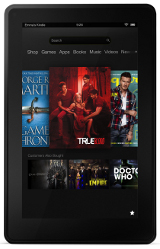
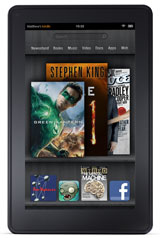
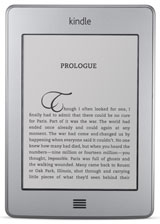
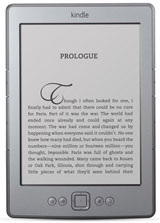
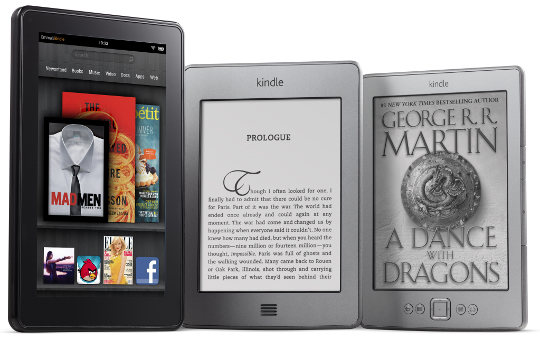
Fast forward to the end of 2011 and there are three new Amazon Kindles: the Kindle 4, Kindle Touch, and Amazon's first tablet, the Kindle Fire.
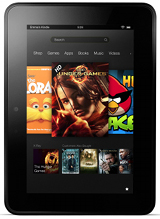
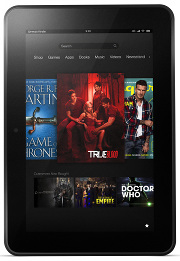
The Kindle Fire is Amazon's first tablet and color ebook reader. It is set to compete directly with the Barnes and Noble Nook Tablet, and to a lesser extent the iPad.
The Kindle Fire, priced at $199, doesn't offer as many features as some other tablets, but the price is so much lower than the competition that it is still a huge success.
Unlike the other Kindles, the Kindle Fire uses a backlit LCD screen. It's better for reading at night, but outdoors in bright light the E Ink Kindles have the major advantage.
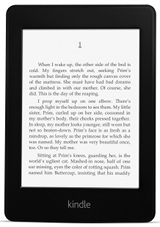
The Kindle Touch and Kindle Touch 3G were released at the same time as the Kindle Fire, and have been greatly overshadowed by it.
Starting at $99, the Kindle Touch offers more features than the Kindle 4. It has a touchscreen, optional 3G, twice as much memory and battery life, and supports audiobooks, text-to-speech, and music playback.
The Kindle Touch uses the same type of infrared touchscreen technology as the Nook, Kobo, and Sony Readers.
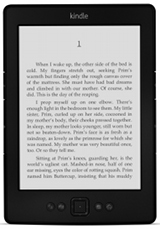
Starting at $79, the Kindle 4 is the lowest-priced E Ink ebook reader ever.
Even the non-subsidized version at $109 that is available internationally as well as the US is an incredible bargain compared to the prices of other ebook readers.
The Kindle 4 is a streamlined Kindle that lacks some features the other models offer, so make sure to read this review before buying.
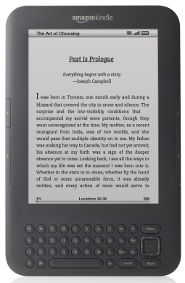
In August 2010, Amazon introduced two different version of the Kindle 3, a WiFi-only model for $139 and a WiFi plus 3G wireless version for $189.
Then in 2011 Amazon started offering discounted Special Offer versions of the Kindle 3 that have screensaver ads and special coupon deals, making four different Kindle 3 models to choose from.
After the release of the Kindle 4, Amazon changed the name of the Kindle 3 to the Kindle Keyboard, and continue to sell it. It starts at $99 and goes up to $189.
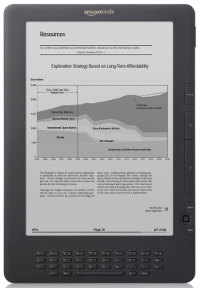
Amazon released the Graphite Kindle DX in July 2010. It was the first ebook reader to feature the new higher contrast Pearl screen from E Ink.
The Kindle DX is designed to make ereaders more accessible to newspaper and magazine readers, as well as business professionals and students that need to carry a lot of PDFs, documents, and textbooks.
One of the features that sets it apart from its smaller brother is the accelerometer, which rotates the viewed image from portrait to landscape as you rotate the reader.
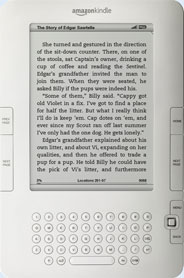
The Amazon Kindle 2 was released in February of 2009. It retailed for $369 until summer when Amazon dropped the price down to $299. By the time the Kindle 3 was released, it sold for just $189.
The Kindle 2 was a huge success for Amazon. It has over 17,000 reviews posted on Amazon.com, with an average rating of 4.5 out of 5 stars.
With the release of the Kindle 3, Amazon no longer makes the Kindle 2. It now sells used for around $145, still holding its value quite well.

The Amazon Kindle and Kindle Reading apps now support borrowing library ebooks from your local libraries. Check this Kindle Library eBook Guide to learn everything there is to know about the Kindle and library ebooks.

Amazon has reading apps for most platforms so that your Kindle ebooks can be read on several devices, including the iPad, iPhone, Android tablets and phones, iPod touch, Blackberry, PC and Mac computers, and more. Library ebooks even work with the Kindle apps.
If you found this article helpful, please help support this site. Thank you!Find this website helpful? If so, please help support this site. It's free, easy, and only takes a couple seconds. Learn how »